Zirconia Vs Titanium Implants: The Differences
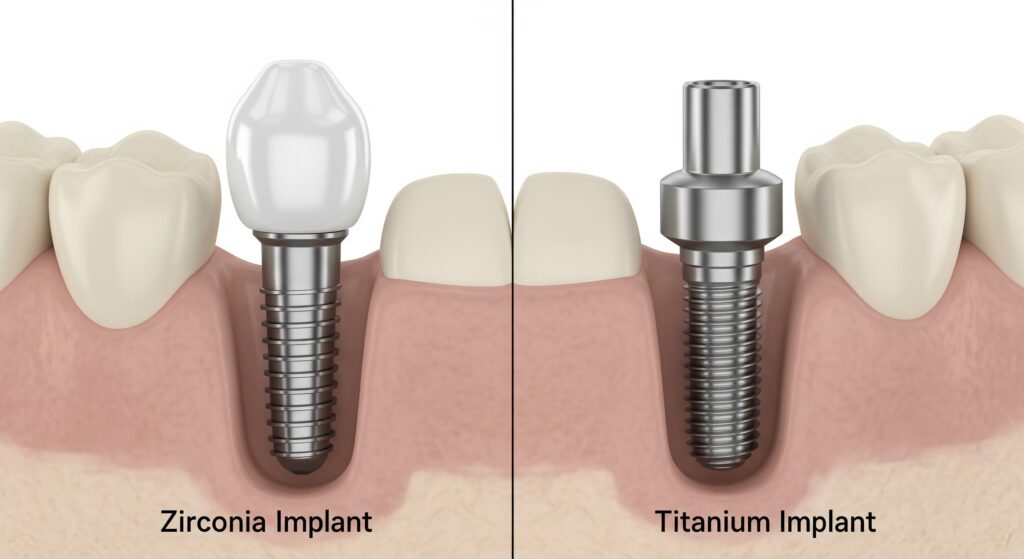
Choosing the right material for your dental implant isn’t always simple. Titanium implants have been the standard for decades, but zirconia teeth implants have gained popularity, particularly among patients looking for a metal-free option or a more natural look.
Both have their advantages, and the right choice depends on your goals, oral health, and budget. At Southeastern Dental Center, we specialize in both titanium and zirconia implants.
Our team helps patients make confident decisions by walking them through how each material performs, what it costs, and what kind of results to expect.
In this guide, we’ll compare zirconia vs titanium implants across appearance, strength, cost, treatment process, and candidacy, so you know what to expect before starting treatment.
What Are Titanium Dental Implants?
Titanium has been used in dentistry for over 50 years. It’s a strong, biocompatible metal that fuses with bone naturally through a process called osseointegration. That fusion creates a stable base for a crown, bridge, or denture.
Here’s why titanium implants are still widely used today:
- Proven track record: Titanium is considered the gold standard. Millions of patients worldwide have had successful, long-lasting results with titanium implants.
- Biocompatibility: The body usually accepts titanium well, and allergic reactions are rare. It integrates safely with the jawbone, encouraging new bone growth around the implant.
- Durability and strength: Titanium is lightweight but strong. It holds up under bite force, even in back molars, and can last 20+ years with proper care.
- Osseointegration process: Titanium forms a direct bond with bone. This allows the implant to stay firmly anchored over time, reducing the risk of loosening or shifting.
What Are Zirconia Teeth Implants?
Zirconia implants are a metal-free alternative to traditional titanium implants. They’re made from ceramic (zirconium dioxide), a strong and biocompatible material that blends well with natural teeth and gums. Patients often choose zirconia for its aesthetic appeal and non-metal composition.
Here’s what makes zirconia implants different:
- Metal-free composition: Zirconia is a ceramic material, not a metal. That makes it a great choice for patients with sensitivities to metal or those who prefer a holistic approach.
- Natural appearance: The white or off-white color closely resembles real tooth roots. This helps prevent the dark lines or gray tint that sometimes show around the gums with titanium implants.
- Biocompatible ceramic: Like titanium, zirconia integrates with the jawbone. While the material is different, it still supports strong osseointegration for long-term stability.
- One-piece vs. two-piece designs: Most zirconia implants are made as one solid piece, which reduces bacteria buildup around the connection point. Some brands now offer two-piece versions for more placement flexibility.
Aesthetic Differences: Zirconia vs Titanium
When looks are a top priority, particularly for visible teeth, implant material can affect the final result. Both options support natural-looking crowns, but they interact with gums and light differently.
Here’s how zirconia vs titanium implants compare in terms of aesthetics:
- Gum line appearance: Titanium is gray, which may show through thin or receding gum tissue. Zirconia is tooth-colored, so it blends more naturally at the gum line, especially in the front of the mouth.
- Color matching: Zirconia implants help crowns appear more seamless, particularly under soft tissue. Titanium may require extra effort to mask color during crown design.
- Thin gum tissue considerations: Patients with thin or translucent gums often prefer zirconia to avoid dark shadows or visible metal beneath the surface.
- Front teeth vs. back teeth: Appearance is usually more important for front teeth. Zirconia is often preferred in those areas, while titanium tends to be used in the back, where strength is the bigger concern.
Strength and Durability Comparison
Both titanium and zirconia are strong materials, but they perform a little differently under pressure. Choosing between them often depends on how much force the implant will handle and where it will be placed.
Here’s how they compare on strength and long-term performance:
- Titanium advantages: Titanium has decades of clinical use with a success rate of over 95%. It’s flexible enough to absorb pressure without cracking, which makes it reliable for molars and multi-tooth restorations.
- Zirconia strength: Zirconia is dense and fracture-resistant. While early versions were more brittle, newer designs hold up well in daily use, especially for single-tooth implants in lower-pressure zones.
- Clinical studies: Titanium still has more long-term research behind it. Zirconia studies are growing, but most only track results over 5 to 10 years.
- Failure rates: Both materials show low failure rates when placed correctly. However, titanium’s two-piece design offers more flexibility in angling and placement, which can reduce complications in complex cases.
Zirconia Implants Cost vs Titanium Cost
When comparing zirconia implants vs titanium cost, zirconia usually comes out higher. That’s partly due to the material itself and partly due to how it’s manufactured and placed.
Here’s a closer look at what affects pricing:
- Material cost differences: Zirconia is more expensive to produce and work with. It’s milled from a solid block of ceramic and often takes more time to shape and customize than titanium.
- Treatment complexity: Zirconia implants are often placed as a one-piece design, which requires very precise planning. That added complexity can increase the surgical fee.
- Long-term value: Titanium has a proven track record for lasting 20+ years, and most patients won’t need replacements. Zirconia can also last long-term, but because it’s newer, its lifespan data is more limited. Still, patients who choose zirconia often value the aesthetics and are willing to invest more upfront.
- Insurance coverage: Most dental insurance plans cover implants up to a certain amount, but they usually don’t pay more based on the material. That means patients choosing zirconia often pay a higher out-of-pocket cost.
At Southeastern Dental Center, we offer transparent pricing for both options and help you compare total costs, not just the material.
Who Is a Good Candidate for Each Type?
Not every patient needs the same implant material. The right choice depends on appearance goals, budget, oral health, and how your body reacts to certain materials.
Here’s how zirconia and titanium compare when it comes to ideal candidates:
- Zirconia candidates: Best for patients who want a natural look at the gum line, have metal sensitivities, or prefer a holistic, metal-free option. Zirconia is also popular for front teeth where appearance is a priority.
- Titanium candidates: Ideal for those who need maximum strength, have strong bone support, or want a more budget-friendly option. Titanium works well for back teeth and multi-unit restorations.
- Medical consideration: Patients with autoimmune conditions or concerns about metal exposure often ask about zirconia. Titanium is still safe for most people, but some choose to avoid it entirely.
- Location factors: For visible front teeth, zirconia blends in better with the gums and surrounding teeth. For molars or areas that handle more force, titanium offers long-term durability and flexibility in placement.
Advantages and Disadvantages of Each
Both zirconia and titanium implants come with pros and cons. Understanding the trade-offs can help you choose the material that fits your needs and expectations.
Here’s how they compare side by side:
Titanium
| Pros | Cons |
| ✔️ Decades of clinical success | ❌ Gray color can show through gums |
| ✔️ Lower cost than zirconia | ❌ Some patients prefer a non-metal option |
| ✔️ Flexible two-piece design for easier placement | |
| ✔️ Excellent long-term durability |
Zirconia
| Pros | Cons |
| ✔️ Tooth-colored for a more natural look | ❌ Higher cost than titanium |
| ✔️ Metal-free and biocompatible | ❌ Fewer long-term studies available |
| ✔️ Smooth surface may reduce plaque buildup | ❌ May be more prone to chipping or fracture under high force |
| ✔️ Preferred by patients with metal sensitivities |
The Treatment Process for Both Types
While zirconia and titanium implants use different materials, the treatment process is very similar. The key differences come down to how each implant is designed and placed.
Here’s what to expect step by step:
- Consultation and planning: Your dentist will assess bone health, review your goals, and determine which material fits best. Zirconia may require more precise planning due to its one-piece structure.
- Placement procedure: Both implants are placed surgically into the jawbone. Titanium implants usually come in two pieces, allowing for more angle control. Zirconia is often placed as a one-piece, so positioning must be exact.
- Healing timeline: Both types need time for osseointegration, the process where bone fuses with the implant. This usually takes 3 to 6 months, depending on your case and bone quality.
- Final restoration: Once the implant is stable, a crown is attached. The final result should look and function like a natural tooth, regardless of which material was used.
Making the Right Choice
Choosing between zirconia and titanium implants comes down to your personal goals, health needs, and where the implant will be placed. Both materials work well, but one might suit you better depending on your situation.
Here’s what to keep in mind during the decision process:
- Aesthetic priorities: If the implant is visible when you smile, zirconia offers a more natural look at the gum line. It’s a popular choice for front teeth.
- Budget considerations: Titanium implants tend to cost less, making them a practical option for patients focused on long-term value and durability.
- Location in mouth: For back molars that handle strong bite forces, titanium may be the better fit. Zirconia works best in areas with less stress and higher aesthetic focus.
- Personal health factors: If you have concerns about metal exposure or a history of allergies, zirconia may be a better match. It’s metal-free and highly biocompatible.
Why Choose Southeastern Dental Center for Your Implants
Choosing the right clinic for implants can impact both the experience and long-term success.
Here’s why Southeastern Dental Center is trusted by patients across Georgia:
- Expertise with both titanium and zirconia: We’ve placed thousands of implants, including full-arch, single-tooth, and all-on-4 cases. Our team also works with zirconia for patients who prefer a metal-free option or have thin gum tissue.
- Advanced planning tools and precision: We use digital panoramic X-rays, CT scans, and 3D/4D imaging to plan every step accurately. It’s how we deliver high-quality results without surprises.
- On-site lab for faster, personalized results: Our in-house dental lab allows us to design and craft crowns using CAD/CAM and CEREC technology. That means fewer visits and a more tailored fit.
- Modern surgical support and comfort-first care: We perform advanced procedures like All-on-4 implants right here in our fully equipped surgical suites. We also offer sedation options for patients who want a more relaxed experience.
- Award-winning, trusted team: Voted Georgia’s #1 dental practice four years in a row, we’re known for fast scheduling, skilled providers, and friendly, responsive care.
Conclusion: Both Options Can Restore Your Smile
Both titanium and zirconia implants offer strong, lasting results. The right choice depends on your oral health, personal preferences, and long-term goals. What makes the biggest impact is working with a provider who takes the time to understand your needs and recommends the best fit for you.
At Southeastern Dental Center, we don’t push one option over the other. We explain the benefits of each, show you how they’ll perform in your case, and guide you through the entire process.
Schedule your implant consultation today and get expert guidance on choosing between zirconia and titanium implants.
Frequently Asked Questions
Are zirconia implants better than titanium?
Not always. Zirconia implants are great for aesthetics and for patients who want a metal-free option. Titanium implants have a longer clinical track record and are often better for strength and flexibility in high-pressure areas like molars.
How much more do zirconia implants cost than titanium?
Zirconia implants usually cost more, often $300 to $1,000+ higher per implant in 2026, because of the material, custom manufacturing, and surgical precision required.
Can I be allergic to titanium implants?
Titanium allergies are rare but possible. If you have a known metal sensitivity, zirconia may be a safer option. We can help evaluate this during your consultation.
Do zirconia implants last as long as titanium?
Titanium has decades of long-term data and can last 20+ years. Zirconia is newer, but recent studies show strong results over 5 to 10 years. Both can last long-term with proper care.
Which type of implant looks more natural?
Zirconia typically blends better at the gum line because of its tooth-colored appearance, making it ideal for visible areas like front teeth.

Related Posts
What is Conscious Sedation Dentistry?
Anxious about dental work? Learn how conscious sedation dentistry keeps you calm and comfortable throughout any procedure. Find out if it's right for you....

Why Do Younger Adults Sometimes Need Dental Implants? Age May Matter Less Than You Think
The American College of Prosthodontists reports that over 120 million Americans are missing at least one tooth. Although tooth loss is more...
Curious About What Actually Happens During a Smile Makeover? We Can Help.
A lot of people hear the phrase “smile makeover” and immediately assume it means a long, expensive, overwhelming process. In reality, the...

Which Dental Implant Option Is Right for You?
Missing teeth affect more than your appearance. Patients also notice changes in the foods they can eat, the way they speak, and...

How Much Do Full-Mouth Dental Implants Cost?
Full-mouth implants are one of the most life-changing dental treatments you can have. They offer a stable, natural-looking smile that looks, feels,...

How Much Do All-on-4 Dental Implants Cost?
Choosing All-on-4 dental implants is more than just a dental procedure – it’s an investment in long-term health, comfort, and confidence. Unlike...